
As I stepped out of the shower, I could hear my mom yelling,
“You’re so selfish. You used up all the hot water!”
I froze, towel clutched around me, water still dripping down my back.
“I was only in there for ten minutes…” I started to explain.
She cut me off. “Stop talking back! If you think you’re such a big woman, then get out!”
Her words kept coming, sharp and relentless.
About the water, my attitude, and all the ways I wasn’t living up to her expectations. I stood there, silent, waiting for it to end.
Eventually, it did.
She stopped speaking to me for two months.
My punishment for talking back.
That’s when I learned love could disappear without warning.
Maybe you know that feeling, the moment love gets yanked away so fast, it’s like it was never there. You’re left wondering, What did I do wrong?
When you grow up with emotionally immature parents, it’s common to believe love has to be earned.
They’re warm and close when you’re easy, agreeable, or useful. But the moment you speak up, push back, or have needs of your own, they go cold.
Bonus: When you join my weekly newsletter, you’ll get instant access to The Love Log, a daily self-love and self-acceptance practice.
- But Here’s The Problem…
- Why Self-Love Feels So Hard After Emotional Neglect
- Why It’s Hard To Trust In Love Now
- What Changes When You Let Love and Self Love In?
- These Strategies Can Help…
- Practical Ways To Accept Love and Self Love
- Before You Start…
- Get Your Free Love Log: A Daily Practice for Letting Love In
But Here’s The Problem…
When you believe love has to be earned, you get really good at twisting yourself into whatever shape you think will make everyone else happy.
You smile when you want to cry. You say yes when every part of you wants to say no. You give and give until there’s nothing left, and then you give a little more, because that’s how you’ve learned love works.
The cost? You feel depleted. You become disconnected from your needs, your feelings, and your sense of who you are. Shrinking yourself and jumping through hoops for approval eventually turns into self-abandonment.
When this is your pattern, love doesn’t land the way it should. Care from others can feel uncomfortable or hard to trust, and self-love feels foreign, even selfish.

Why Self-Love Feels So Hard After Emotional Neglect
When you’re conditioned to use self-abandonment as the go-to strategy to get your needs met by an emotionally immature parent, self-love doesn’t register as soothing.
Instead of having a calming effect, turning toward yourself can send your nervous system into a tailspin. You feel on edge, like something is off or about to go wrong.
It’s hard to relax into a warm bath when your body is sending off alarm bells and your inner critic is reminding you of all the other productive things you could be doing.
Even small acts of self-care can trigger an uneasy feeling, like you’re doing something you shouldn’t.
That’s because self-love interrupts an old pattern. It asks you to stay present with feelings and needs you once pushed aside to preserve connection.
This triggers a fight or flight situation because your body learned long ago that focusing on your needs and feelings can lead to rejection and destroy the connection you crave.
Why It’s Hard To Trust In Love Now
Self-abandonment doesn’t just make self-love difficult. It also affects how safe it feels to receive love from someone else.
When you learn that staying connected to other people means abandoning yourself, you get used to putting your needs aside, swallowing your feelings, and pushing past your limits just to keep closeness.
Because of this, love never feels steady. It feels uncertain, like it can disappear at any moment.
So instead of relaxing into love, you stay alert. You read the room. You adjust yourself so your relationships don’t fall apart.
None of this means you’re broken. These reactions made sense when you were younger and needed them to stay safe.
They’re learned responses that helped you get your needs met in childhood, not personal failures.
But now, you have options.
You can embrace love and self love without sacrificing who you are.
What Changes When You Let Love and Self Love In?
Letting love and self love in doesn’t make life perfect, but it does make it steadier. You begin to notice small but meaningful shifts:
- Your body settles. You no longer live on high alert and constantly scan for signs of rejection or brace for what might go wrong. There’s more space to breathe.
- Your inner voice softens. Instead of picking yourself apart and ruminating over your mistakes, you focus more on showing yourself grace and kindness.
- You feel more grounded in who you are. The constant second-guessing quiets down and you stop overthinking every move. You start making choices based on what actually matters to you, not just what keeps the peace or feels “acceptable” to everyone else.
- Your choices become clearer. You hold onto the people and situations that fill you up, and you let go of what drains you.
- The future feels less threatening. As your body settles, hope starts to feel safer too. You can look ahead without bracing, while staying grounded in the life you’re building right now.
Your worth is no longer something you’re trying to prove. It’s something you live and breathe, naturally, confidently, and without apology.

These Strategies Can Help…
Now that you know what’s possible when you let love in, the question becomes: how do you get there?
The truth is, you don’t have to leap into love all at once. The strategies I’m sharing aren’t about forcing yourself to “just love yourself more.” They’re small, gentle steps that make space for something different, so you can notice care when it shows up, offer yourself compassion in the moment, and slowly learn to trust that love can be safe.
Think of these strategies as invitations to soften the walls you’ve built, without having to tear them down overnight. Each step helps you practice welcoming love in—and giving it back to yourself—in ways that feel natural, steady, and real.
Related: How to Manage Your Inner Critic and Stop Doubting Yourself (Printable)
Practical Ways To Accept Love and Self Love
1. Pause and Acknowledge Care
When someone offers you kindness, notice the part of you that wants to brush it off or avoid the attention. This urge is an old self-protective habit that once helped you feel safe. Recognize it for what it is and pause.
Take a slow breath and simply say, “Thank you.” Let the person’s kind words or actions sink in. You don’t need to downplay it or return the compliment right away. Just take it in. Notice what it feels like in your body to receive appreciation or care. If it feels awkward or if your mind starts to argue with it, that’s okay. Let the moment be what it is without trying to fix it.
The same goes for kindness from yourself. Maybe you take a much needed break, and then immediately feel guilty or undeserving. That’s the same old self-protective habit at work.
Pause. Take a breath, and remind yourself that it’s safe to accept love. Let your own words or actions register without judgment. The more you practice receiving love, from yourself and others, the easier it becomes to believe that you truly deserve it.
2. Notice and Name the Resistance
When letting love in feels uncomfortable, start by noticing what’s happening in your body. Maybe it’s a tight chest, tense shoulders, or a knot in your stomach. Then try saying, “I notice I’m feeling guarded right now, and that’s okay.”
Naming what’s there, without judging it, helps take the edge off and keeps you present instead of shutting down. Each time you do this, you’re showing yourself it’s safe to feel what you feel. This builds trust in your ability to receive love when it comes.
3. Accept Love Without Trying To Earn It
Give yourself permission to receive care without feeling like you have to “balance the scales” later. You don’t need to work twice as hard, give something back immediately, or prove you’re worthy first.
Accepting love without earning it might look like letting yourself rest without running through tomorrow’s to-do list to justify it. Accepting help without promising to return the favor. Enjoying something simply because it makes you happy, not because you’ve “earned” it.
The more you practice receiving without keeping score, the more natural it will feel to believe you deserve good things just for being you.
4. Offer Yourself Small Acts of Love Daily
Look for simple ways to show up for yourself every day. It could be :
- Keeping a promise you made to yourself, like going for that walk you said you would.
- Cooking your favorite meal just because it brings you joy.
- Speaking to yourself with kindness instead of criticism when you make a mistake.
- Taking five minutes to stretch, read, or sit quietly with your coffee before the day rushes in.
These moments might seem small, but they add up and teach your brain that self-love is safe, nourishing, and never selfish. As time goes on, these daily acts become proof that you can be a steady source of care for yourself.
5. Keep a “Love Log”
Start a notebook or note on your phone where you record every compliment, kind word, or loving gesture that comes your way, whether it’s from others or from yourself.
Maybe a friend texts to say they appreciate you, a coworker praises your work, or you make yourself a meal that feels like comfort. Write it down in detail so you can fully remember the moment.
On days when you feel undeserving or disconnected, read through your Love Log as a reminder that care and connection are still there, even if you can’t feel them right now. Your Love Log becomes living proof that love isn’t something you have to chase, it’s already showing up for you.
Before You Start…
As you begin using these strategies, some discomfort might come up.
You might feel guilty when you slow down or set a boundary. Or maybe you second-guess yourself and wonder if you’re being selfish or doing it wrong. You might even feel frustrated when old habits show up again.
These reactions don’t mean the strategies aren’t working. They usually mean something familiar is being interrupted.
Another challenge is impatience. You might expect things to feel better quickly, and get frustrated when they don’t. Or you may slip back into old habits and feel discouraged, thinking you’ve failed.
That’s part of the process too.
Accepting love and self-love isn’t about getting it right every time.
It’s about noticing when your instinct is to disappear, over-give, or push yourself, and choosing, even briefly, to respond differently.
So take this slowly. Notice what each practice shows you, not whether you did it “right.” Some days it will feel awkward. Other days it will feel surprisingly natural.
Each small moment of kindness, presence, or restraint is helping your body learn that love doesn’t require self-sacrifice.
You can embrace love and self love without abandoning yourself.
Get Your Free Love Log: A Daily Practice for Letting Love In
When you’ve learned to doubt your worth, love can be easy to miss, or hard to receive, even when it’s right in front of you.
The Love Log is designed to help you gently notice and let in moments of care, kindness, and support throughout your day.
By writing down small moments of love–a pause you gave yourself, a kind word, someone showing up for you–you open yourself up to what’s already there, instead of focusing only on what feels missing.
As time goes on, this simple practice helps your heart and body recognize that love is safe to receive.
Download your Love Log today and and start letting love and self love in, one moment at a time. Here’s a sneak peak of the Love Log:
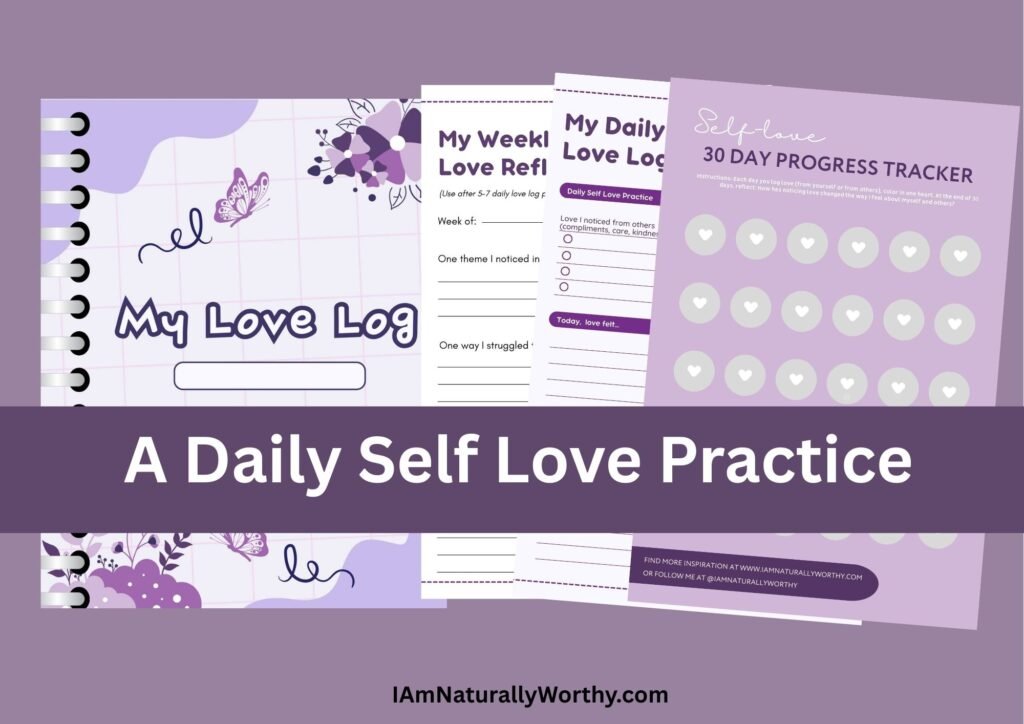
Before you go, get my FREE printable Love Log: A Daily Self Love Practice
Your Turn
How do you let love into your life? Share in the comments below.